Key Takeaways
- Sweep or dry-vacuum kitchen floors prior to mopping to prevent dry grit from scratching surface finishes or turning into slurry when wet.
- Match your cleaning solution to your flooring material: use mild dish soap and warm water for tile, pH-neutral formulas for laminate or stone, and damp-only microfiber for sealed hardwood.
- Work in manageable sections, wringing the mop head thoroughly to avoid pooling standing water that damages subflooring or degrades adhesives.
- Place absorbent mats at entry doors to intercept winter road salt, slush, and fine mud before foot traffic drags grit across kitchen surfaces.
Between cooking prep, spills, and foot traffic from family and pets, kitchen floors handle more daily wear than almost any other surface in your home. Keeping these high-traffic areas clean requires more than a quick sweep when crumbs pile up. Following a proper cleaning routine alongside professional house cleaning services in Lancaster, Pennsylvania helps protect surface glazes, prevents grime buildup in corners, and preserves your home’s flooring investment over time.
Step-by-Step Routine for Cleaning Kitchen Floors
Different flooring materials react differently to moisture and cleaning agents, but every successful floor care routine follows four foundational steps.
1. Clear Dry Debris Thoroughly
Before introducing liquids, sweep the room with a soft-bristled broom or use a vacuum set to hard-floor mode. Removing loose crumbs, pet hair, and fine soil prevents abrasive particles from scratching surface glazes or creating a muddy film when mixed with damp cleaning solutions.
2. Select the Appropriate Cleaning Agent
Match your cleaning agent directly to your floor material:
- Ceramic and Porcelain Tile: Mix warm water with two to three drops of mild, grease-cutting liquid dish soap.
- Luxury Vinyl Plank (LVP) and Sheet Vinyl: Use warm water mixed with a small amount of neutral floor cleaner to lift cooking oils without leaving sticky residues.
- Sealed Hardwood: Use a specialized pH-neutral wood floor cleaner applied via a damp spray mop head.
- Natural Stone (Slate, Travertine, Marble): Use only specialized pH-neutral stone cleaners—never acidic pantry items like vinegar or lemon juice.
3. Damp-Mop in Sections
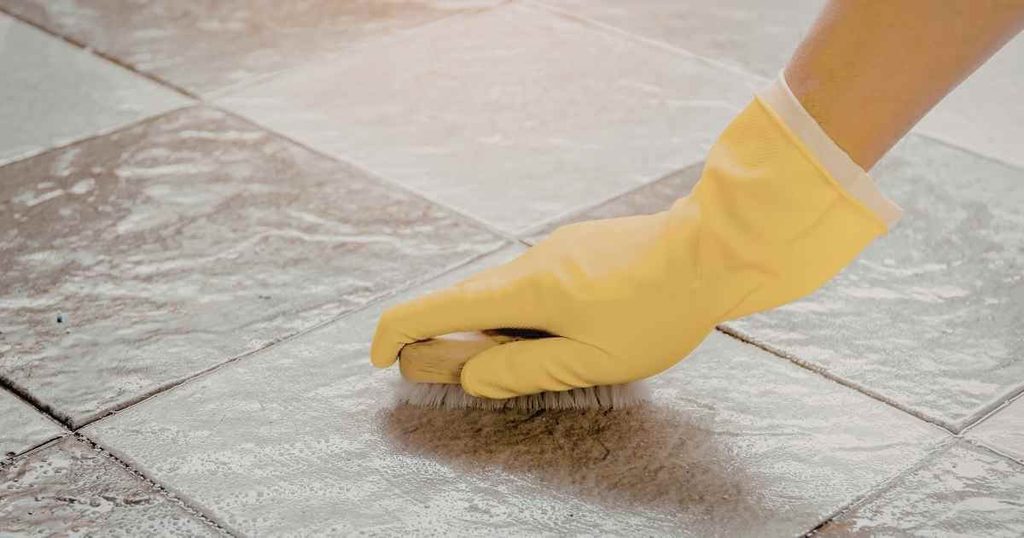
Dip your microfiber mop into the cleaning solution and wring it out completely until it is damp rather than soaking wet. Mop the kitchen in small sections, moving in an ‘S’ pattern to gather remaining fine dust. Working in defined areas keeps cleaning solutions from drying onto the surface before you can wipe them clear.
4. Rinse and Buff Dry
Change out dirty bucket water regularly during the process. After mopping, rinse the floor with a clean, water-dampened microfiber mop head to remove leftover detergent traces that dull floor finishes. Finish by buffing high-traffic lanes with a clean, dry microfiber towel to eliminate water spots.
| Flooring Type | Recommended Solution | Mopping Technique | Critical Caution |
| Ceramic / Porcelain Tile | Warm water + mild dish soap | Microfiber mop; wring out excess liquid | Avoid harsh wire brushes on grout |
| Luxury Vinyl Plank (LVP) | Warm water + neutral cleaner | Damp microfiber flat mop | Avoid steam mops (can loosen adhesive) |
| Sealed Hardwood | Specialized pH-neutral wood cleaner | Light spray + damp microfiber head | Never allow standing water on seams |
| Natural Stone | Dedicated pH-neutral stone cleaner | Damp microfiber mop; rinse well | Avoid acidic products (vinegar, lemon) |
Managing Regional Challenges: Winter Salt and Mud
Central Pennsylvania winters bring unique floor maintenance challenges. Road salt, de-icing chemicals, and melting slush tracked indoors on boots can dull protective coatings and leave white alkaline spots on kitchen entryway surfaces.
When calcium chloride or rock salt dissolves on floors, its crystalline structure acts like liquid sandpaper when walked on. To mitigate damage:
- Place heavy-duty, rubber-backed doormats outside and inside every exterior entry door to catch moisture and salt crystals before they reach living areas.
- Vacuum entry mats frequently during winter months to prevent accumulated salt from migrating onto hard floors.
- Wipe up salt tracks promptly using a damp microfiber cloth soaked in warm water to prevent surface pitting.
According to technical guidance from the American Cleaning Institute (ACI), using pH-neutral cleaning solutions and avoiding oversaturated mop heads is essential for preserving surface seals and extending the lifespan of residential hard flooring.
Products and Habits to Avoid
Preserving the appearance of your kitchen floor requires knowing which habits and chemicals to avoid:
- Harsh Chemical Mixtures: Mixing household cleaning products is dangerous and can ruin floors. Combining bleach with ammonia, vinegar, or acidic cleaners creates hazardous fumes, while unbuffered bleach damages grout lines and strips floor seals. Always review safety guidance from Poison Control before using new chemical combinations.
- Excessive Standing Water: Flooding floors forces water into subflooring seams, causing hardwood boards to cup, laminate planks to swell, and vinyl tiles to lift along seam edges.
- Abrasive Scouring Pads: Steel wool, wire brushes, and harsh scouring powders leave microscopic scratches on vinyl and tile glazes, creating rough grooves where dirt collects faster.
- Steam Mops on Sensitive Surfaces: While steam works well on unsealed ceramic, the high heat and moisture under pressure can melt glue backing on luxury vinyl plank flooring and compromise polyurethane topcoats on hardwood.
Long-Term Care and Preventive Floor Maintenance
Maintaining clean floors between deep-cleaning sessions comes down to consistent preventive measures:
- Clean up oil splatters around stoves, sauce spills, and liquid drips immediately to prevent pigments from setting or creating slip hazards.
- Place protective felt glides under kitchen chair legs and barstools to prevent scratching when furniture slides across the floor.
- Incorporate routine floor care into your regular household schedule. Adding floor maintenance to a recurring house cleaning routine ensures consistent removal of fine dust and grease before buildup occurs.
When seasons change or high-traffic areas need extra attention, scheduling a comprehensive deep cleaning addresses baseboards, corners, and floor edges that daily mopping misses.
FAQ
How often should kitchen floors be mopped?
Kitchen floors in active households should be swept or vacuumed every one to two days to remove loose crumbs. Damp mopping with a neutral cleaning solution is typically needed once a week to remove cooking oils, sticky spills, and surface dirt.
Why does my kitchen floor feel sticky after mopping?
A sticky floor is usually caused by using too much cleaning product or failing to rinse away detergent residues. When concentrated cleaner dries on the floor, it leaves a tacky film that traps fine dust. Rinsing the floor with plain warm water removes the buildup.
Is vinegar safe for cleaning kitchen floors?
Diluted vinegar is safe for glazed ceramic tile, but it should never be used on natural stone, hardwood, or waxed surfaces. The acetic acid reacts with natural stone, causing irreversible etching, and gradually strips protective coatings off hardwood finishes.
Ready for a Fresh, Clean Home Without the Hassle?
Keeping up with housework while managing a busy family schedule can leave you feeling exhausted. At Anytime Cleaning, our family-owned team takes pride in helping Lancaster households enjoy fresh, beautifully maintained living spaces without the stress. Every cleaner on our team is background-checked, professionally trained, and fully licensed, insured, and bonded for your peace of mind. Backed by our 100% satisfaction guarantee—offering a free re-clean within 24 hours if anything falls short—we deliver consistent, high-quality results using eco-friendly products that are safe for your family and pets. Whether you need support transitioning into a new home with our move-in/out cleaning services or reliable ongoing care, we treat your space with the same attention we give our own. If you are ready for a reliable service you can trust, connect with our team today at (717) 897-1796 to request your personalized quote.
